North India (Himalayas) · Pheran, Taranga & Kashmiri Embroidery
Jammu & Kashmir
Jammu and Kashmir — often called Paradise on Earth — is India's northernmost region, framed by the Himalayas, Karakoram, and Hindu Kush ranges. Its culture is a rich tapestry of Hindu, Muslim, Buddhist, and tribal traditions, and this diversity is beautifully expressed in its clothing.
The most iconic garment of Kashmir is the Pheran — a long, loose robe worn by both men and women. It is cut wide for practical warmth, allowing the wearer to carry the traditional Kangri (a wicker firepot) beneath it during the cold Himalayan winters. The Pheran is a canvas for spectacular Kashmiri embroidery — intricate floral motifs, chinar leaf designs, and paisley patterns created through Sozni (fine needle) and Aari (hook) techniques that can take months to complete.
For daily wear, salwar kameez in Kashmiri style — with distinctive embroidery at the neckline, cuffs, and hem — is widely worn. For weddings, Kashmiri brides wear the Taranga — a brightly colored, heavily embroidered head scarf that is an integral and irreplaceable part of the bridal ensemble. The Kashmiri Pashmina shawl needs no introduction: considered the finest shawl in the world, it is woven from the soft undercoat of the Changthangi goat and represents the pinnacle of Indian textile craft.
I had the privilege of attending a Kashmiri wedding in Austin, and the bride Sana was breathtaking in her saree and Taranga. That brightly colored head scarf transforms the entire look. Kashmiri embroidery is something I deeply admire — the patience and skill involved is extraordinary.

The Pheran — Kashmir's iconic embroidered robe

Nisha in a Kashmiri-style salwar suit with traditional embroidery
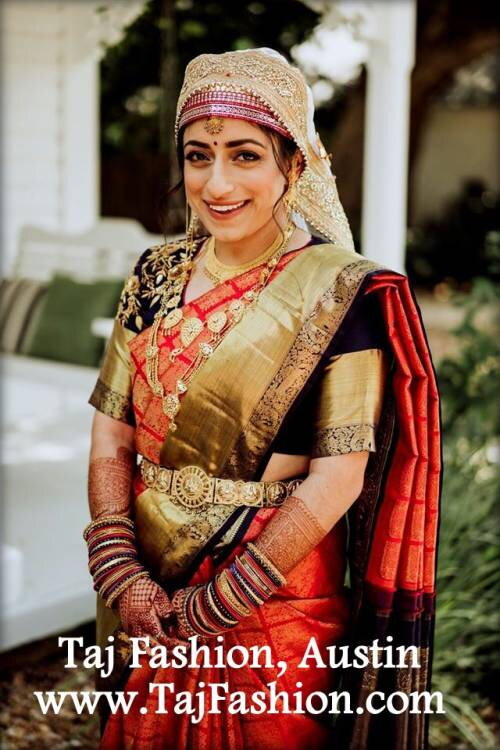
A Kashmiri bride wearing the Taranga — a brightly colored embroidered head scarf
South India · Mundum Neriyathum — Graceful in White & Gold
Kerala
Kerala, India's southernmost state, is a land of backwaters, spice gardens, classical arts, and exceptional literacy — and its fashion philosophy reflects the same values: simplicity, elegance, and refinement.
The traditional attire of Kerala women is the Mundum Neriyathum — a two-piece garment in ivory or cream white with a distinctive golden border called the Kara. The Mundu is draped around the lower body, while the Neriyathum is worn over the upper body with a blouse. In contemporary Kerala, this traditional ensemble has been partially replaced by sarees — but on religious occasions, festivals, and weddings, the Mundum Neriyathum is the garment of choice.
What distinguishes Keralite sarees is the Kasavu — a gold zari or metallic thread woven into the border and pallu. Kerala Kasavu sarees in cream cotton with thick gold borders are considered one of India's most graceful textiles. Kanjivaram silk sarees (woven nearby in Tamil Nadu but widely worn in Kerala) feature in bridal occasions. The Kara border of the saree was historically coated with actual copper or gold leaf, lending it a characteristic shimmer.
Kerala taught me that clothing doesn't need color to be extraordinary. The white and gold Mundum Neriyathum is one of the most refined looks I've ever worn. The mural I painted on the wall behind me in one of these photos is inspired by Kerala's ancient mural painting tradition — it felt right to create that backdrop.

Nisha in the Mundum Neriyathum — Kerala's signature white and gold ensemble

Kasavu saree — cream cotton with the iconic gold Kara border

The grace of Kerala: simplicity elevated through fine weaving

Nisha with her hand-painted Kerala mural — inspired by ancient temple frescoes
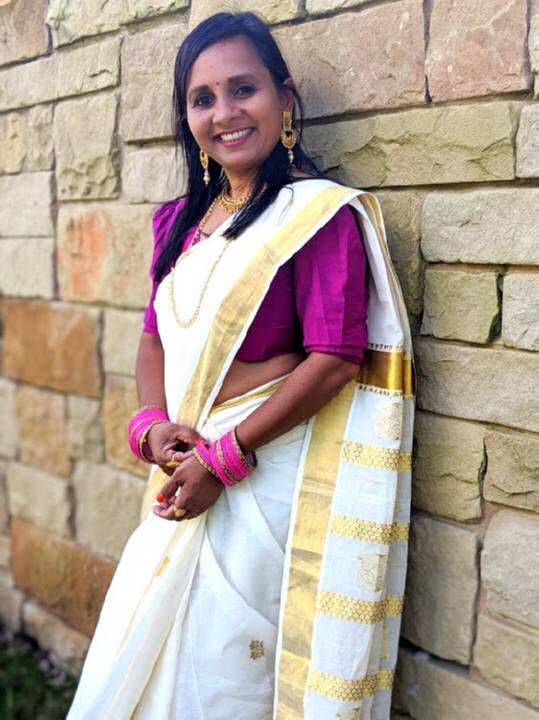
Close-up of the Kara — Kerala saree's distinctive metallic gold border
West India · Nauvari & Paithani — The Grand State's Grandest Sarees
Maharashtra
Maharashtra — whose name literally translates as the Grand State — is the home of Bollywood, Ganesh Chaturthi, and two of India's most magnificent saree traditions.
The Nauvari Saree (Nav = nine, Vari = yards) is also called the Kaashtha saree. What makes it extraordinary is its draping style: the saree is worn like a dhoti — pulled between the legs and tucked at the back — without requiring a petticoat beneath. This style originated as a practical adaptation allowing women to move freely during historical periods of war and farming. Today it remains a symbol of Marathi pride and is worn at festivals, weddings, and cultural performances.
The Paithani Saree is one of India's most prized handwoven textiles, made in the town of Paithan in Aurangabad. Woven on a pit loom with fine silk and real gold or silver zari thread, Paithani sarees are identified by their distinctive oblique square border and a peacock-motif pallu. A genuine Paithani can take months to weave and is considered a lifetime investment. Brahmin women wear sarees with a unique style — pleats at the back, tucked at the waist.
Jewelry in Maharashtra is particularly rich: the Nath (large nose ring, sometimes connected to the ear by a chain) is iconic. Green bangles (Patli or Chooda) symbolize prosperity in marriage. Toe rings on the second toe carry Ayurvedic significance.
Maharashtra's saree culture is among the most sophisticated in all of India. The Paithani is one of those textiles that you can feel the generations of craft in — every thread placed with intention. And the Nauvari draping is pure power — it says something about how fashion and strength can exist in the same garment.

Nauvari — the nine-yard saree draped in the Kaashtha (dhoti) style

Paithani saree — handwoven silk with the iconic peacock pallu

The Brahmin pleating style — pleats at the back, draped with quiet elegance

The Nath (nose ring) — a signature of Maharashtrian bridal jewelry
Visit Taj Fashion, Austin TX
Find Your State's Traditional Look
Nisha stocks sarees, lehengas, and regional garments from across India. Come explore — by appointment, with her full personal attention.